
On our second day of business at the deli, a stranger passing through wrote us the most ridiculous review ever, claiming the breakfast burritos I had assembled at an ungodly hour that morning—with my father-in-law’s homemade gravy recipe, ground pork, eggs, and cheese—were “obviously from McDonald’s”. This review didn’t hurt my feelings. It ticked me off.
The nearest McDonald's is an hour round trip and I guarantee you I did not get up at 4 a.m. to drive to McDonald's for your burrito, good sir. No. On that second day of business I got up at 4 a.m. to go open the store alone because my husband had worked himself into a complete physical meltdown after months and months of remodeling, cleaning, buying equipment and groceries, stocking the store and deli with his life's savings, and working 18 hours on opening day, kind sir. He could not stand upright without vomiting that morning, without the room spinning, without his heart leaping from his chest. I opened the store by myself that day—the second day of this completely different life—and I cooked the sausage and scrambled the eggs and assembled the best breakfast burrito I could at the time, sir. I'm sorry you didn't like it.
I was reminded of this insult while reading Katelyn Beaty’s latest essay, AI Is the Perfect Tool for Celebrity Christian “Authors”. She compared writers who use AI to “chefs” serving prepackaged, microwaved meals. “…we might understand why the professional chef would take issue with the new chef in town: Because their fake cooking mocks the creative work they love and have devoted their lives to.”
I don’t claim our breakfast burritos are a gourmet meal, but they are made fresh daily with some care and family history, so for some rando to compare them to McDonald’s is insulting (and I have no clue how McDonald’s breakfast burritos are made but c’mon). Or for him to insinuate I would drive to McDonald’s to buy ready-made burritos to pawn off to my customers as our own? Also insulting.
The trouble with AI is that it gives a faster, easier product and our culture idolizes speed and ease and products, but it cuts out the process of humans being formed into wholeness. Authors and musicians and artists of all kinds, including chefs, create out of their own telos as beings, created, and that happens slowly, repeatedly, with practice and discipline. Formation happens over time, and we change shape as we create works that change shape in others, and change the shape of others.
Back to the food analogy. When I was in college I worked at a small restaurant for a while and then got a job waiting tables at the local golf course and country club, which was much more hoity-toity than I was used to. One day I went back to check on my table’s order and all the cooks (chefs?) were out back on a smoke break. My customers’ meal hadn’t been started yet and I had put the order in a full fifteen minutes earlier. When I asked them about the order, one of the cooks laughed and said, “This is fine dining, honey, not fast-food.” Well.
Apparently patrons of country clubs expect that their food will take a long time.
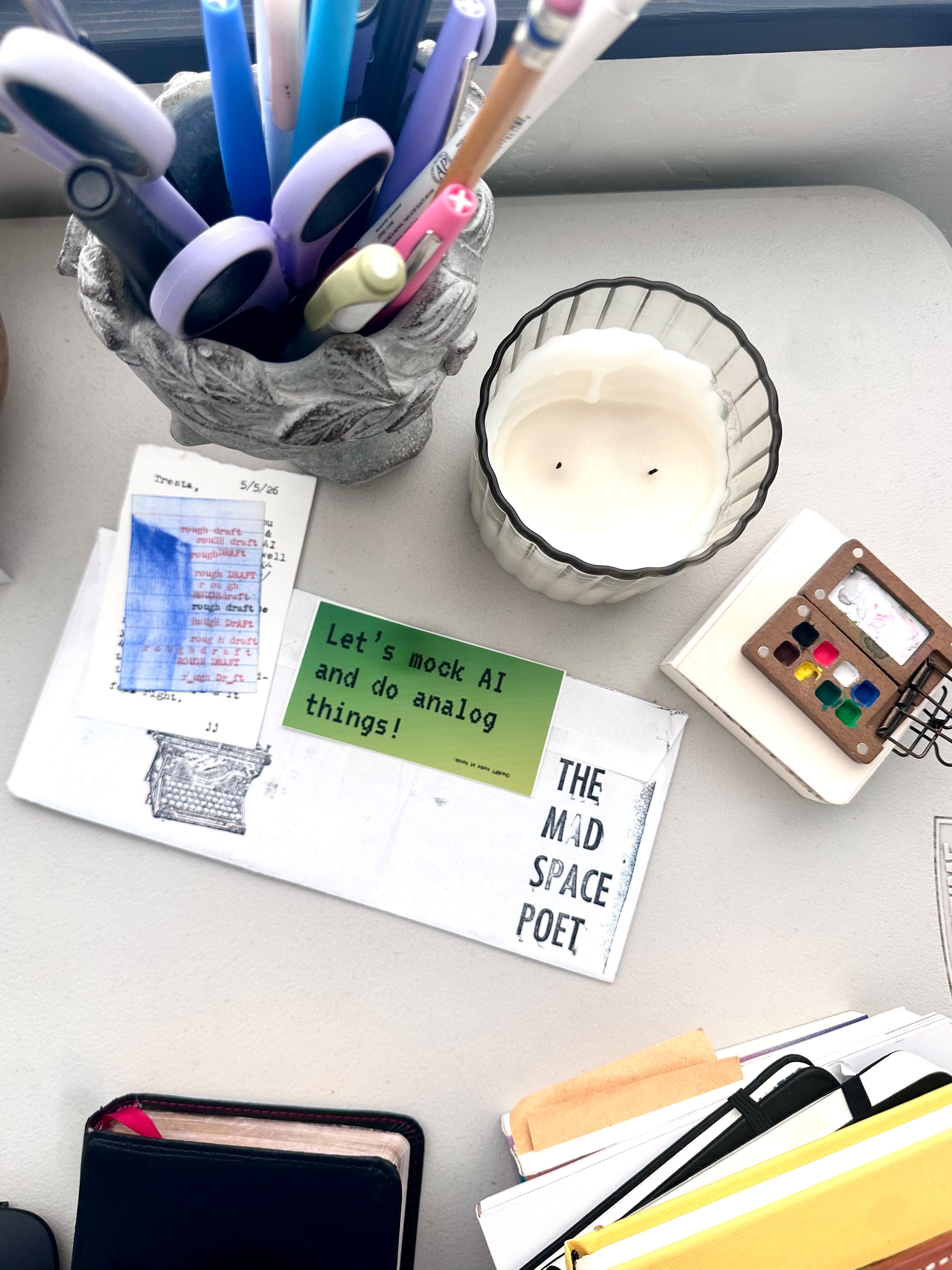
The circle of creation—the creator being formed by what she creates and shares, in the hopes that it forms something in another person—is broken by machines making stuff. What kind of people do we become when we hand over to a machine the good works God prepared beforehand for us to walk in?1
I am not an expert in anything AI and you can find much more detailed arguments for and against it. But I know that some of you are not immersed in the writing world like I am. Some of you are taking a break from your work to read my words here simply because you love me (hey fam!), or you’ve found something I’ve written in the past that has resonated for you (you’re my family too). None of us are exempt from AI’s influence though, unfortunately. If you have an internet connection, you have seen work done by artificial intelligence.
I write this to those of you readers who maybe haven’t really considered how harmful AI is to those who create, and also how harmful it is to your own humanity.
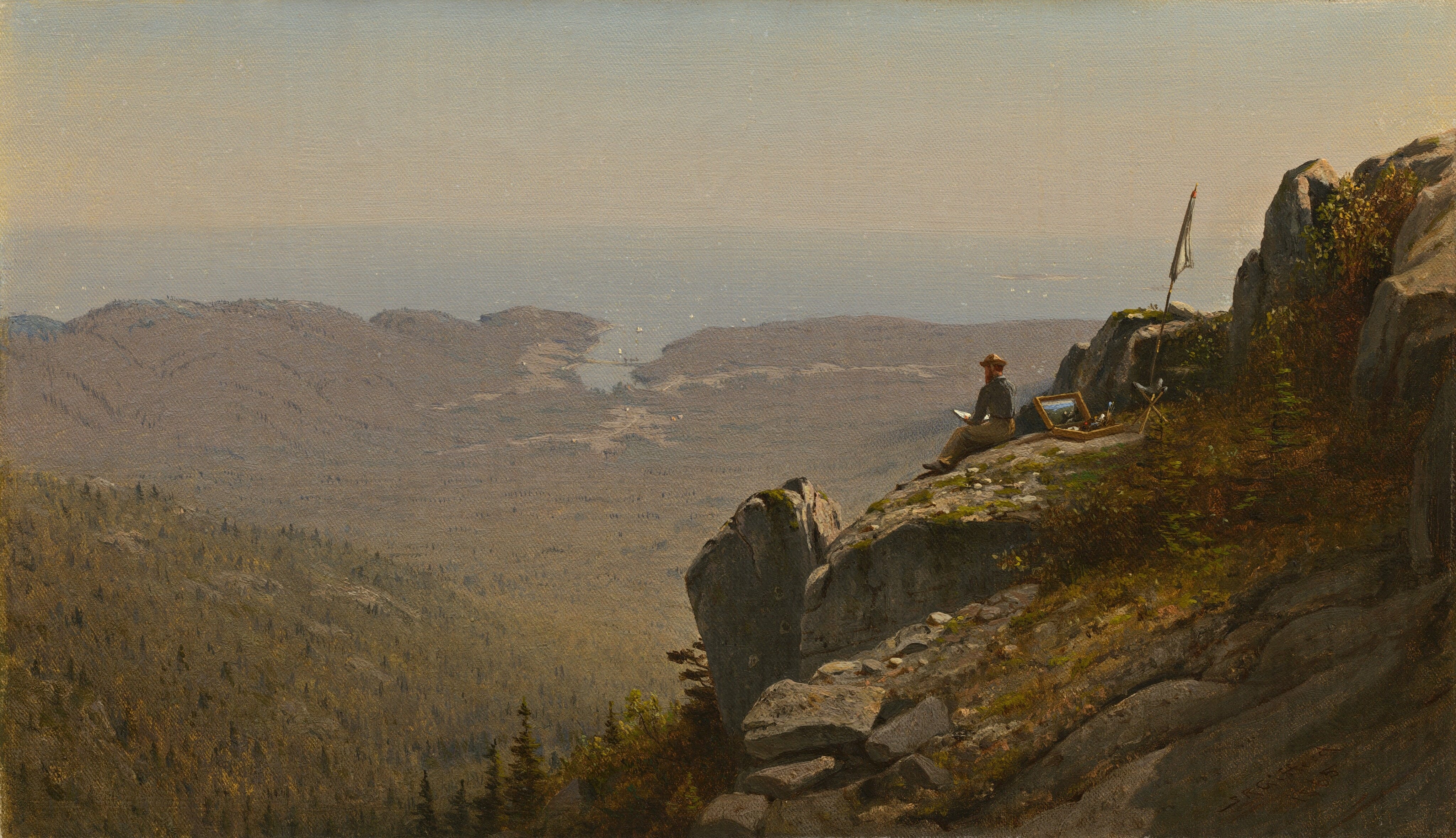
I’m writing a book that has taken over seven years, and not because it is deeply researched and I needed that long to compile all my notes. It took so long because I was changed in the writing of it. It took so long because life kept happening along the way. It also took so long because I am slow like a crockpot and I struggle with doubt and distraction and shinier things. All those circumstances have produced a book, you could say. But they have also produced the me that I am today.
I am not a machine. AI could probably put together a well-ordered book on my topic by scrubbing my internet life, pinching my essays and pulling my Instagram posts, and spitting out 60k words that kinda sound like me, in just a few minutes. Would you want to read that?
Because that kind of fake writing mocks the creative work I love and have devoted a portion of my life to.
If enough people want to read books written by machines that steal from the work of artists and authors, Barnes & Noble seems willing to sell them. We know Amazon has no qualms about it. If enough people are willing to consume music (even “worship” music!!!!) created by machines, Spotify will sell it. Is it okay, as long as they label it as created by AI?
The inevitability of AI can make it seem like there’s nothing to be done. It’s everywhere, and it can make life so much easier, right? And making things easier makes life better, right? And that’s the main point. Right? Life should be easy and work should be fast and frictionless. I hope you hear my sarcasm.
There is room for this conversation to go in many directions, with lots of caveats. For example, creating a spreadsheet to track the budget for my husband’s construction client is not a “creative work” for me, not on the same level as writing an essay or painting a picture. If I loved creating spreadsheets I wouldn’t want to use AI to create one. But being a person who does not know how all the glories of a good spreadsheet come together, and who just needs a solid way to track the many subcontractors and change orders and overages and payments etc etc…I admit I was very happy when ChatGPT made a spreadsheet for me. I used it as a tool to make my work more efficient and yes, save me time. But I am not passing myself off as someone who understands spreadsheets, and I am not selling the spreadsheet ChatGPT made for me.
I am still learning and figuring out how much AI is okay in my life (and if any of it is really okay for the environment), but I am absolutely settled on a zero tolerance approach for AI in my own creativity and in the creativity I consume2.
You are a reader. I hope you have read rich prose and poetry in your lifetime that has shaped you, grown your empathy and wonder, given you new perspectives, and taught you how to do something new. I hope written words have made you cry and laugh. I hope you’ve been moved to action because of something you’ve read or heard. I guarantee the human beings who have created your favorite works of literature and music and dance and cinema, etc, have been changed by what they have created.
How about if that is what we decide life is about, regardless of the time or trouble it takes? How about if we call this life our Creative Country Club and expect good things to take a little longer? Because we are all being formed by the work we do and it really doesn’t make sense to skip the process and expect good results.
Ephesians 2:10
“Consume” feels like such a dirty word these days but I couldn’t come up with anything else.
Thank you for persevering for 7+ years. I love knowing the person you have become, even in this small online way. You’re giving me the gumption I need to keep going with my own book, one—sometimes painfully—AI-free chapter at a time.
Your concern about AI is the same all over the country. It is happening so fast and causes a lot of us to be skeptical at the very least; because, it is being given such a hard sell. If something is so good, why are they trying so hard to convince us? Because, there are a lot of people who will make money! They aren’t doing studies about the bad effects that will happen from AI. Teachers will have no idea if a student has a strong sense of imagination, of curiosity, of understanding, of ambition or of compassion. And that’s besides people losing jobs, people using AI to further fraud and crime. we need to pray 🙏 🙏🙏.